Stats: 16 members, 153 Topics. Date: April 15, 2026, 11:03 pm
#NIFINCO Badagry: The Forgotten Fibre Industry That Once Powered Nigeria’s Agro-Packaging
Badagry Forum / General / History / Tourism / #NIFINCO Badagry: The Forgotten Fibre Industry That Once Powered Nigeria’s Agro-Packaging 287 Views
(Go Down)

 (m):
11:35am on January 18
(m):
11:35am on January 18
Known to generations of Badagrians as NIFINCO, the Nigeria Fibre Industry Company represented one of the earliest and most ambitious attempts to industrialise agro-packaging in post-independence Nigeria.
Established in 1966 by the Western Regional Government, #NIFINCO was an agro-sack manufacturing firm created to process kenaf, a plant of the hibiscus family, into fibre bags used for agricultural packaging.
At the time, Nigeria was seeking to reduce dependence on imported jute bags used for cocoa, cashew, palm kernel and other export crops. NIFINCO Badagry was conceived as a strategic response to this challenge.
The Badagry factory was one of only two pioneer fibre bag production initiatives in Nigeria, the other being the Nigeria Fibre Production Limited (NNFPL) located in Jos.
Records indicate that NIFINCO had an installed production capacity of approximately 12 million jute-equivalent fibre bags per annum, a remarkable scale for its era.
Beyond fibre sacks, the factory also produced woven sackcloth and jute ropes, making it a key supplier within Nigeria’s agricultural value chain during the late 1960s and early 1970s. Its products were essential for post-harvest storage and export packaging at a time when agriculture remained central to the national economy.
At its peak, NIFINCO Badagry directly employed over 200 workers, while also stimulating numerous indirect businesses, including transportation, trading and ancillary services. For many families in Badagry, the factory represented stable industrial employment and a visible symbol of modern economic progress.
Despite its ambitious vision, the factory struggled with a critical challenge—raw material supply. Throughout most of its operational life, NIFINCO depended heavily on imported kenaf fibre.
Even after the Federal Government initiated commercial kenaf cultivation within Nigeria, local production was able to meet only about 10 percent of the factory’s annual processing requirement of 11,000 metric tonnes of retted fibre. This supply gap significantly constrained production efficiency and long-term viability.
The expansive industrial complex also acquired a curious local nickname—“Gardella”—a name whose origins remain unclear. Oral accounts suggest it may have been linked to Italian technical operators or managers associated with the factory, reflecting the international industrial collaborations common during that period.
NIFINCO ceased operations in 1974, and the company was formally wound up two years later. Its counterpart in Jos, NNFPL, survived longer but eventually closed in 1992 due to technical limitations.
The collapse of both fibre plants marked a turning point in Nigeria’s agro-packaging sector, leading to a nationwide shift towards synthetic and hydrocarbon-based sacks for agricultural produce.
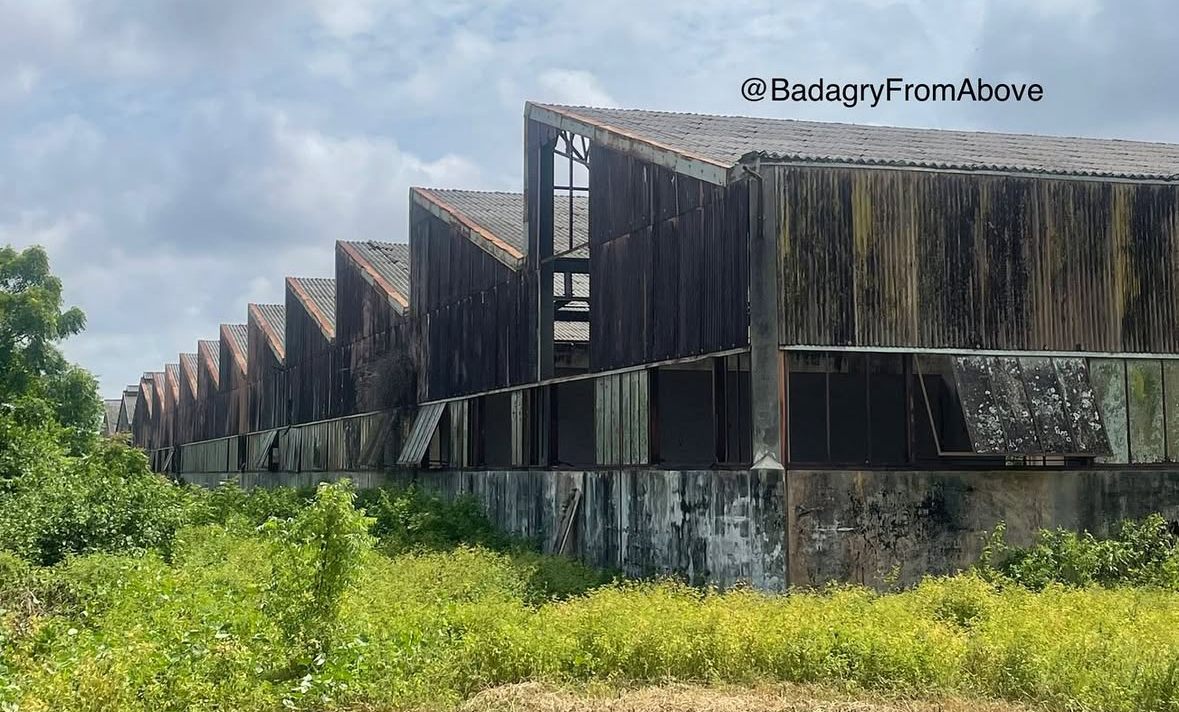
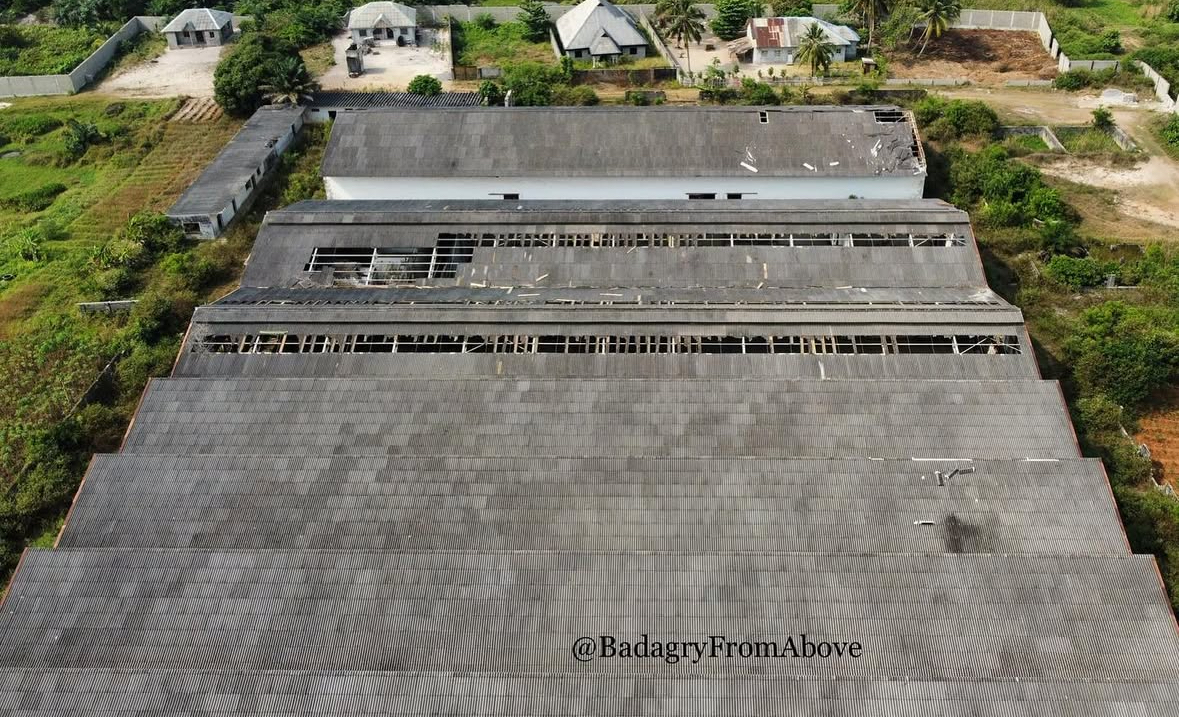
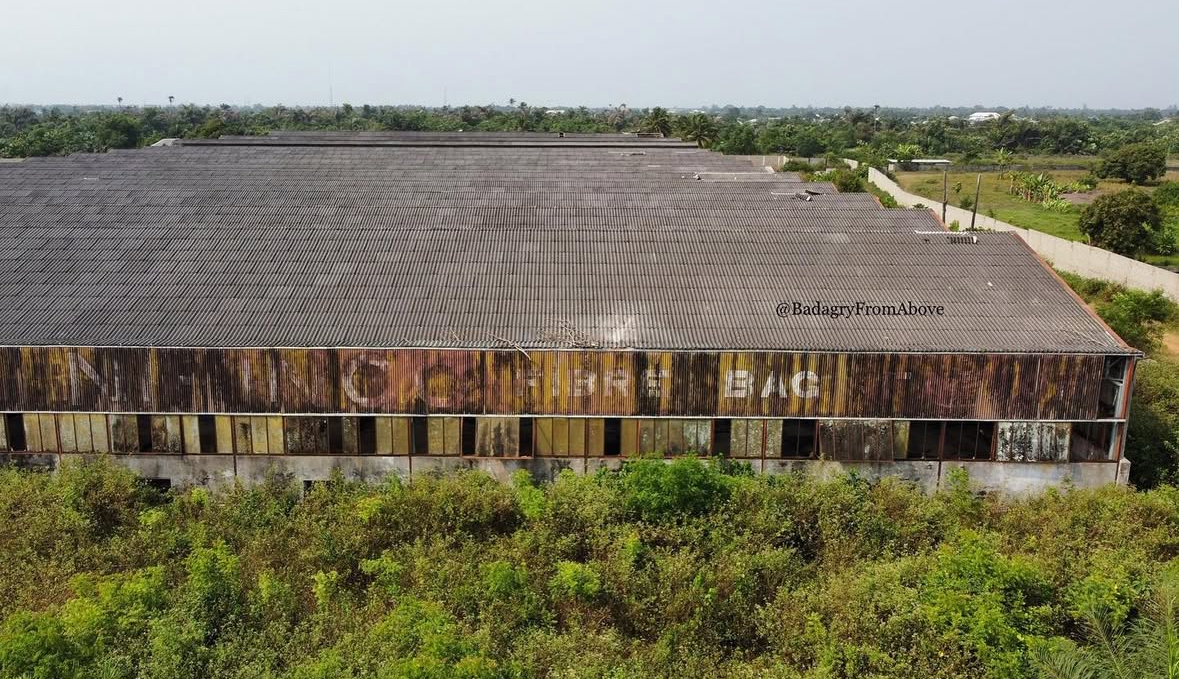
Today, the skeletal remains of the NIFINCO factory still stand beside the Badagry Lagoon, near present-day landmarks such as Adron’s Emirate Park & Gardens. Though long abandoned, the site remains a powerful reminder of Badagry’s industrial heritage—a chapter often overshadowed by the town’s more widely known cultural and transatlantic history.
For heritage tourism and historical preservation, NIFINCO offers a compelling narrative: a story of early industrial ambition, technological experimentation, and the challenges of sustainable development in post-colonial Nigeria. With proper documentation, signage and conservation, the site could serve as an industrial heritage landmark, educating visitors about Badagry’s role in Nigeria’s manufacturing history.
NIFINCO may no longer produce fibre sacks, but its legacy endures as evidence that Badagry was once more than a transit town—it was an active participant in the nation’s industrial journey.
Below are images of the defunct site as captured by Badagry From Above.
 0 Like
3 guests viewing this topic


Badagry Forum is owned and managed by Semasa Opeoluwa Hokon(semasir)
(Read BF Rules)
- Copyright © 2026. All rights reserved.
Disclaimer: Every Badagry Forum member is solely responsible for anything
that he/she posts or uploads on .
For enquiries & feedbacks send email to: badagryforum@gmail.com