Welcome, Guest:
Join Badagry Forum /
Login /
Trending /
Recent
Stats: 16 members, 153 Topics. Date: April 15, 2026, 11:05 pm
Ghana Must Go: A Turning Point In West African Migration History
Badagry Forum / General / History / Tourism / Ghana Must Go: A Turning Point In West African Migration History 137 Views
(Go Down)
Ghana Must Go: A Turning Point In West African Migration History.
by
semasir (m):
7:51pm on January 17
(m):
7:51pm on January 17
(m):
7:51pm on January 17
The 1983 mass deportation of West African migrants from Nigeria, commonly remembered as Ghana Must Go, remains one of the most defining moments in the shared social and migration history of West Africa.
Though often reduced to a phrase or a bag, the episode reflects deeper realities about economic pressure, political decision-making, and the long tradition of movement across the region.
For decades before 1983, migration across West Africa was part of everyday life. Shared borders, cultural ties, and colonial legacies made movement between countries such as Nigeria, Ghana, Benin, Togo, and Niger largely fluid. During Nigeria’s oil-driven economic boom of the 1970s, the country became a major destination for workers and traders seeking opportunity.
Many migrants settled in cities like Lagos, Ibadan, and Badagry, contributing to construction, transport, market trading, domestic work, and small businesses.
By the early 1980s, however, Nigeria’s economic fortunes had changed. Falling oil prices, rising unemployment, inflation, and pressure on housing and public services created widespread frustration. In this climate, public attention increasingly turned toward undocumented migrants, who were portrayed as competitors for scarce resources.
In January 1983, the civilian government of President Shehu Shagari announced that foreign nationals without valid residence documents were required to leave the country within a short timeframe.
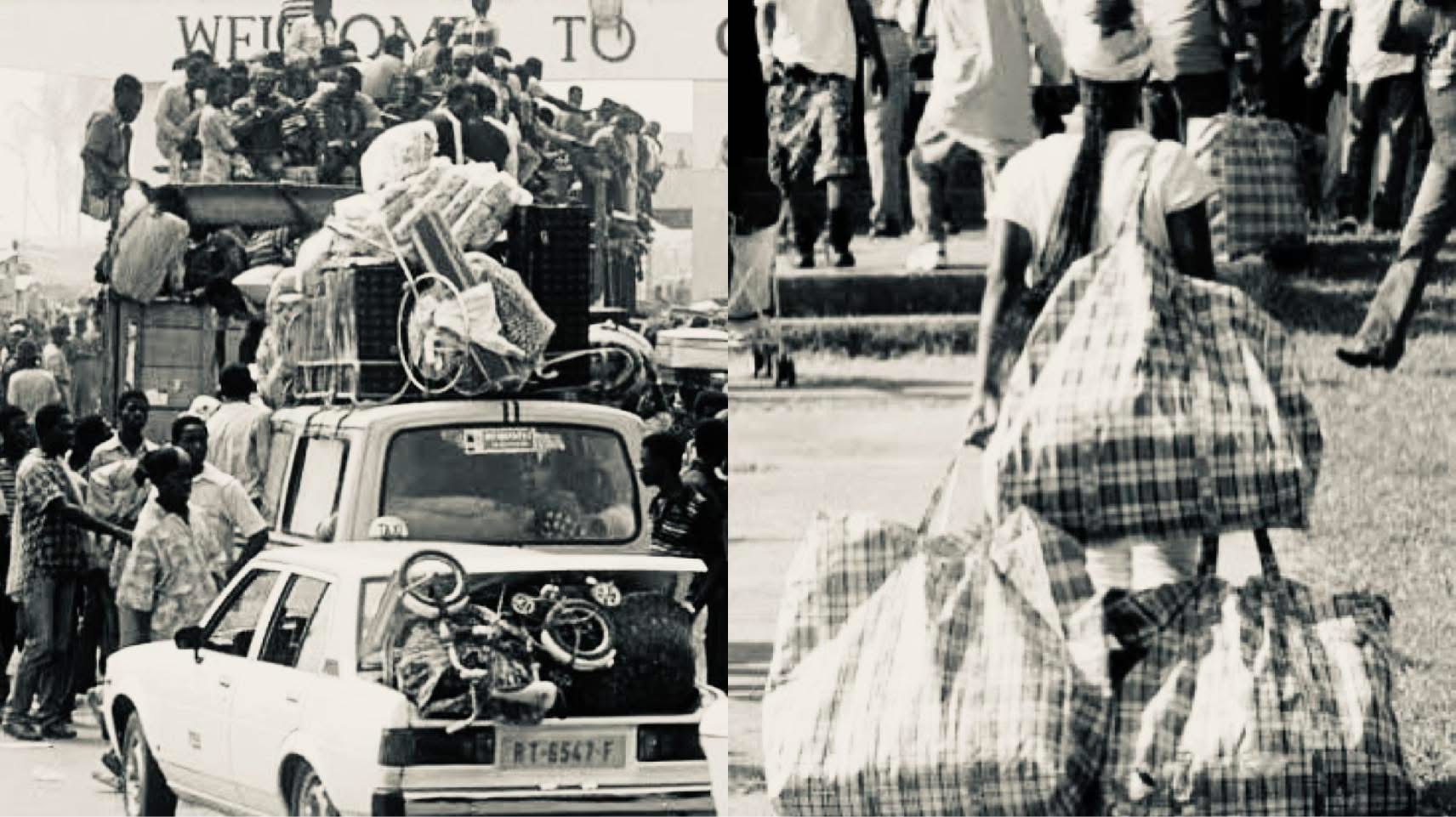
The enforcement of the order was swift and far-reaching. Millions of migrants—many of whom had lived in Nigeria for years or decades—were forced to leave. Ghanaian nationals formed the largest group affected, though people from several West African countries were also involved. With little time to prepare, families hurriedly packed their belongings into large woven plastic bags, which soon became the enduring symbol of the expulsion.
Over time, the name Ghana Must Go became attached not only to the event but also to the bags themselves, embedding the episode into popular memory.
The human impact was severe. Migrants undertook difficult journeys back to their countries of origin, often under overcrowded and exhausting conditions.
Many arrived with limited resources and uncertain futures. In Ghana, the sudden return of large numbers of citizens placed pressure on housing, employment, and social services, while also raising questions about reintegration and national capacity.
Diplomatically, the episode strained relations between Nigeria and Ghana, though it was not without historical context. Earlier policies such as Ghana’s 1969 Aliens Compliance Order— which had affected many Nigerians—highlighted a pattern of reciprocal expulsions in the region.
The 1983 deportation exposed the fragile balance between regional unity and national interest, especially during periods of economic hardship.
From a historical perspective, Ghana Must Go serves as a reminder of how quickly social inclusion can give way to exclusion when economic pressures mount. It underscores the vulnerability of migrant communities and the tension between regional integration and state sovereignty in post-colonial West Africa.
For communities like Badagry—long shaped by migration, trade, and cross-border interaction—the memory of 1983 is more than a national event. It is part of a broader regional story about movement, belonging, and shared destiny.
Remembering it today offers lessons on tolerance, cooperation, and the human cost of political decisions made in times of crisis.
Though often reduced to a phrase or a bag, the episode reflects deeper realities about economic pressure, political decision-making, and the long tradition of movement across the region.
For decades before 1983, migration across West Africa was part of everyday life. Shared borders, cultural ties, and colonial legacies made movement between countries such as Nigeria, Ghana, Benin, Togo, and Niger largely fluid. During Nigeria’s oil-driven economic boom of the 1970s, the country became a major destination for workers and traders seeking opportunity.
Many migrants settled in cities like Lagos, Ibadan, and Badagry, contributing to construction, transport, market trading, domestic work, and small businesses.
By the early 1980s, however, Nigeria’s economic fortunes had changed. Falling oil prices, rising unemployment, inflation, and pressure on housing and public services created widespread frustration. In this climate, public attention increasingly turned toward undocumented migrants, who were portrayed as competitors for scarce resources.
In January 1983, the civilian government of President Shehu Shagari announced that foreign nationals without valid residence documents were required to leave the country within a short timeframe.
The enforcement of the order was swift and far-reaching. Millions of migrants—many of whom had lived in Nigeria for years or decades—were forced to leave. Ghanaian nationals formed the largest group affected, though people from several West African countries were also involved. With little time to prepare, families hurriedly packed their belongings into large woven plastic bags, which soon became the enduring symbol of the expulsion.
Over time, the name Ghana Must Go became attached not only to the event but also to the bags themselves, embedding the episode into popular memory.
The human impact was severe. Migrants undertook difficult journeys back to their countries of origin, often under overcrowded and exhausting conditions.
Many arrived with limited resources and uncertain futures. In Ghana, the sudden return of large numbers of citizens placed pressure on housing, employment, and social services, while also raising questions about reintegration and national capacity.
Diplomatically, the episode strained relations between Nigeria and Ghana, though it was not without historical context. Earlier policies such as Ghana’s 1969 Aliens Compliance Order— which had affected many Nigerians—highlighted a pattern of reciprocal expulsions in the region.
The 1983 deportation exposed the fragile balance between regional unity and national interest, especially during periods of economic hardship.
From a historical perspective, Ghana Must Go serves as a reminder of how quickly social inclusion can give way to exclusion when economic pressures mount. It underscores the vulnerability of migrant communities and the tension between regional integration and state sovereignty in post-colonial West Africa.
For communities like Badagry—long shaped by migration, trade, and cross-border interaction—the memory of 1983 is more than a national event. It is part of a broader regional story about movement, belonging, and shared destiny.
Remembering it today offers lessons on tolerance, cooperation, and the human cost of political decisions made in times of crisis.
 0 Like
Viewing this topic:
4 guests viewing this topic
4 guests viewing this topic


Sister Forums
Badagry Forum is owned and managed by Semasa Opeoluwa Hokon(semasir)
(Read BF Rules)
- Copyright © 2026. All rights reserved.
Disclaimer: Every Badagry Forum member is solely responsible for anything
that he/she posts or uploads on .
For enquiries & feedbacks send email to: badagryforum@gmail.com