Stats: 16 members, 153 Topics. Date: April 15, 2026, 10:57 pm
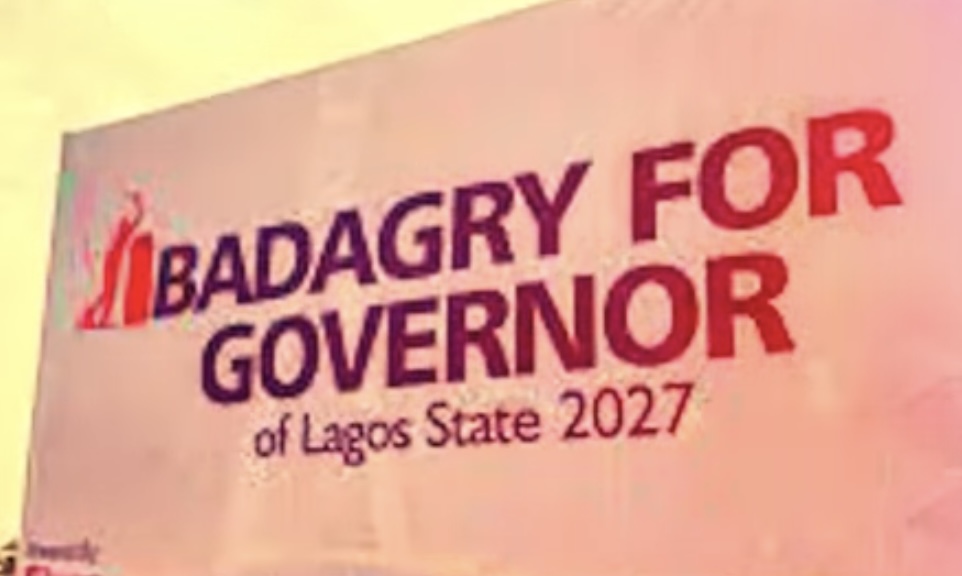
#BadagryForGovernor: Beyond Loyalty, Why Badagry Deserves The Next Governor In Lagos State
Badagry Forum / General / Opinions & OP-Ed / #BadagryForGovernor: Beyond Loyalty, Why Badagry Deserves The Next Governor In Lagos State 128 Views
(Go Down)

 (m):
4:03pm on January 7
(m):
4:03pm on January 7
This is not a coincidence. It is a pattern.
The growing discussion around Badagry for Governor should not be dismissed as emotional agitation or sectional ambition. At its core, it raises a legitimate civic question about inclusion, balance and fairness within Lagos’ political architecture.
Badagry occupies a unique place in Lagos history. It was the gateway of early international trade, the entry point of Western education and Christianity in the state, and a foundation upon which modern Lagos was built. Yet history, it seems, has not translated into political equity.
Successive administrations have relied on Badagry’s loyalty. Its people have voted consistently, mobilised at critical moments, and served across public institutions. From classrooms to civil service offices, from local government structures to party machinery, Badagry has played its part. What it has not received is an opportunity to lead.
Supporters of the status quo often argue that leadership is earned, not zoned. In principle, that argument is sound. In practice, however, it becomes weaker when the same regions repeatedly produce candidates deemed “qualified” while another is permanently overlooked. When exclusion lasts almost 60 years, it ceases to look like coincidence and begins to resemble structural bias.
Developmental disparities reinforce this perception. While recent improvements on the #Lagos–BadagryExpressway are acknowledged, they also highlight how long the area waited for meaningful attention. Beyond the highway, many communities still lag behind in industrial investment, institutional presence and economic opportunities, despite Badagry’s strategic border location and tourism potential.
The conversation, therefore, is not about entitlement. It is about visibility and voice. It is about whether Lagos truly sees all its divisions as equal stakeholders in governance or merely as electoral support bases for decisions made elsewhere.
Critics of the Badagry inclusion argument often frame it as divisive. Yet exclusion itself is divisive. A political system that continually elevates some while sidelining others creates silent resentment and erodes long-term cohesion.
Badagry today is not short of capable hands. The division has produced seasoned professionals in governance, academia, business and international service. The idea that leadership must always come from familiar political centres ignores the evolving realities of Lagos and the depth of talent across its geography.
No one is suggesting that competence should be sacrificed on the altar of zoning. The argument is simpler: if leadership has rotated organically among four divisions, why has Badagry never been considered worthy of that same opportunity?
Lagos prides itself on progressiveness and fairness. If those values are to mean anything, the Badagry question must be confronted honestly, not dismissed as noise or delayed indefinitely.
After almost six decades of loyalty, contribution and patience, Badagry is not asking for favours. It is asking for recognition — and for a political future that reflects its place in the story of Lagos.
That is not agitation. That is democracy at work.
Exerpts from #BadagryForGovernor video documentary
 0 Like
1 guest viewing this topic

Badagry Forum is owned and managed by Semasa Opeoluwa Hokon(semasir)
(Read BF Rules)
- Copyright © 2026. All rights reserved.
Disclaimer: Every Badagry Forum member is solely responsible for anything
that he/she posts or uploads on .
For enquiries & feedbacks send email to: badagryforum@gmail.com