Stats: 16 members, 153 Topics. Date: April 15, 2026, 11:02 pm
Babatunde Ajose: How Badagry Lost Its Economic Momentum — And The Central Role Of Ọba C. D. Akran In Its Interrupted Revival
Badagry Forum / General / Opinions & OP-Ed / Babatunde Ajose: How Badagry Lost Its Economic Momentum — And The Central Role Of Ọba C. D. Akran In Its Interrupted Revival 208 Views
(Go Down)


 (m):
12:12pm on January 4
(m):
12:12pm on January 4
In a detailed historical reflection, Babatunde #Ajose traces Badagry’s troubles to events dating back roughly 150 years, beginning with the collapse of transatlantic trade networks and the town’s turbulent response to the abolition of the slave trade.
According to Ajose, Badagry’s resistance to the end of the trade, documented in European intelligence reports of the era, contributed to a reputational damage that proved economically costly.
As legitimate trade replaced slave commerce in the late 19th century, elite returnee communities — settlers from Brazil, Freetown, Cape Coast and other Atlantic economies — began relocating from Badagry to Lagos. Their departure coincided with a wider commercial exodus. By the 1880s, European trading firms had largely abandoned Badagry, with the final departures occurring in the 1920s. Among those that left were major firms such as UAC, Miller Brothers and Lever Brothers.
Ajose notes that entire streets once regarded as among the most developed in West Africa — including what is now President Soglo Way, stretching from the Badagry Town Hall to #Agbalata Market — were hollowed out. Brazilian-style houses were sold at heavily discounted prices as commerce shifted decisively to Lagos. What followed, he argues, was not only economic decline but a lasting bitterness among the elite returnees, many of whom vowed never again to invest in Badagry.
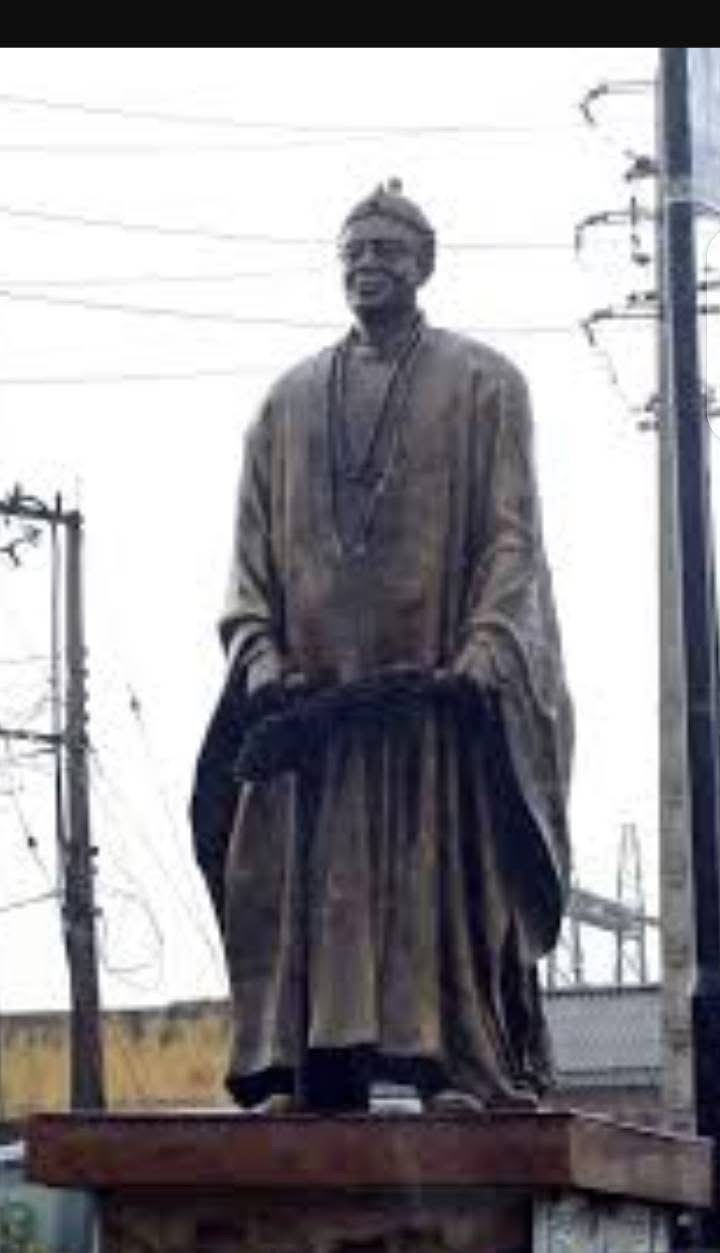
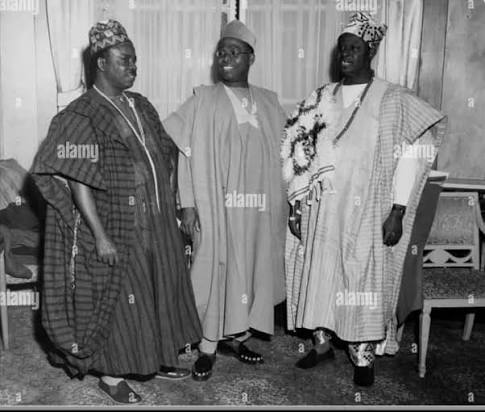
It was against this backdrop that Ọba Cadius Dele Akran (Aholu Jiva Jegba II) emerged as a pivotal figure in Badagry’s modern history. A former Post and Telegraph executive after the Second World War, Akran rose to prominence as one of the major financiers of the Action Group, alongside figures such as Chief Odutola. His political influence grew as a close ally of Obafemi Awolowo during the formative years of Southwest politics.
When Akran ascended the throne of Badagry in the early 1950s, his dual authority as both monarch and senior politician placed the town back into regional focus. He served in multiple high-profile roles, including membership of the House of Chiefs and ministerial portfolios covering Economic Planning, Local Government, Chieftaincy Affairs and later Finance. During this period, Badagry benefited from the siting of key social amenities and public infrastructure.
Ajose describes Akran’s commitment to Badagry’s development as “unparalleled”. The monarch actively projected Badagry as the cultural and political capital of the #Ogu /Gun people in Nigeria, offering scholarships to Gunnuvis from present-day Ogun State and encouraging settlement in Badagry. However, Akran’s refusal to take sides during the Awolowo–Akintola crisis proved politically costly.
His neutrality angered Awolowo and alienated much of the Southwest political establishment. According to Ajose, the fallout marked the beginning of another downturn for Badagry. The town, he argues, became collateral damage in broader regional political disputes, exacerbated by what analysts later identified as Akran’s failure to cultivate successors capable of separating his personal influence from the town’s long-term interests.
Another turning point came under military rule. Ajose highlights the tenure of Mobolaji Johnson, Lagos State’s first military governor, as a moment of missed opportunity. Johnson, who reportedly had ancestral ties to Badagry, identified the Badagry and Ibeju-Lekki axes as Lagos’ future growth corridors. Large tracts of land in both areas were placed under government acquisition to protect them for long-term development.
While Ibeju-Lekki eventually benefited from negotiated land releases and rapid development, Ajose argues that Badagry was left behind. Today, an estimated 65 per cent of land in Badagry remains under government acquisition, making land documentation significantly more difficult than elsewhere in Lagos. For Ajose, this single factor alone has crippled private investment and large-scale development in the area.
Historical rivalries further complicated Badagry’s trajectory. From the 18th century onwards, the town was locked in competition with Lagos Island and Ouidah (in present-day Benin Republic), leading to repeated conflicts. Ajose notes that several military campaigns against Lagos Island were launched from Badagry, contributing to deep-seated mistrust and adversarial politics that persisted into the colonial and post-independence eras.
Politically, Badagry often found itself at odds with dominant power blocs. From its early association with the NCNC, through support for minority parties during successive republics, the town repeatedly aligned outside prevailing Southwest political currents. Ajose argues that this pattern left Badagry structurally disadvantaged for nearly three centuries, with meaningful reintegration into mainstream Lagos politics only beginning under Governor Babatunde Fashola.
In his most critical assessment, Ajose turns to the present. He accuses contemporary political office holders from Badagry of lacking vision, strategy and accountability. Rather than articulating development agendas, he says, many rely on “photo opportunities” and deploy young professionals as defenders against public scrutiny.
“Any reportage or publicity that does not improve the livelihood of Badagry people is meaningless,” Ajose writes. In his view, the absence of coherent plans, long-term programmes and economic strategies has left the town vulnerable, despite its history, geography and potential.
For Ajose, Badagry’s story is not one of destiny but of choices — political, economic and communal. The legacy of Ọba C. D. #Akran stands as evidence that leadership once shifted the town’s fortunes, even if briefly. Whether Badagry can reclaim that momentum, he suggests, depends on a collective willingness to confront history honestly and chart a different future.
 0 Like
1 guest viewing this topic

Badagry Forum is owned and managed by Semasa Opeoluwa Hokon(semasir)
(Read BF Rules)
- Copyright © 2026. All rights reserved.
Disclaimer: Every Badagry Forum member is solely responsible for anything
that he/she posts or uploads on .
For enquiries & feedbacks send email to: badagryforum@gmail.com